
Composite Decking: What Is It and How Does It Perform?
A practical South Jersey homeowner’s guide to composite deck boards, construction, lifespan and maintenance.
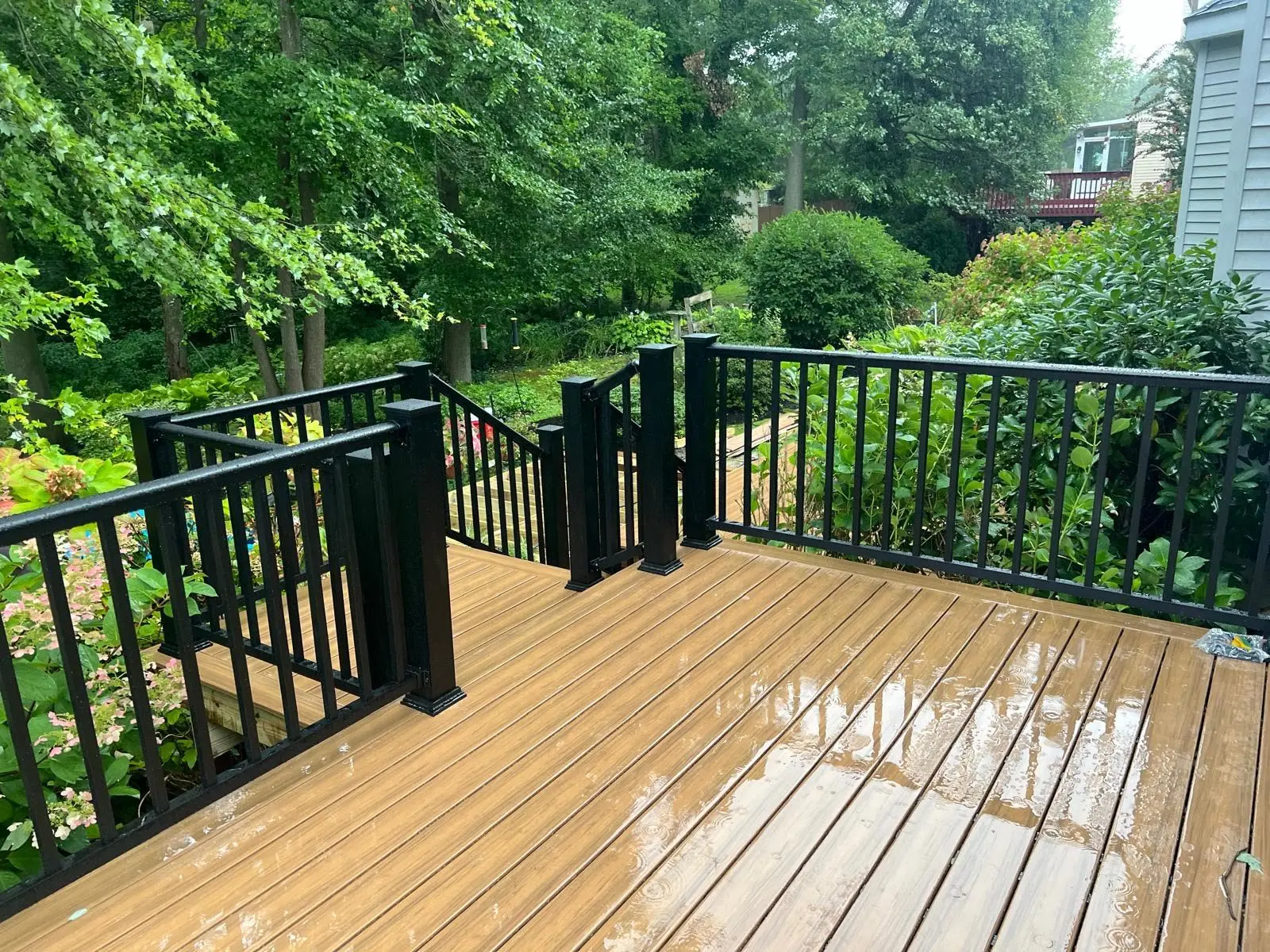
Zenna Decks portfolio photo illustrating deck design details; product identity is not inferred from the image.
Updated October 10, 2026 · Zenna Decks planning guide
What composite decking actually is
Composite decking is a manufactured walking surface rather than a substitute for the entire deck structure. Many products combine polymers with wood fiber; PVC decking is a separate product category with a different composition. Those differences matter when comparing weight, appearance, installation requirements and care. Ask for the exact manufacturer and collection instead of accepting a proposal that simply says composite. A brand may offer several collections with different profiles, finishes and warranties.
The cap, board profile and finish
Many current composite boards have an outer protective cap, but cap coverage and construction vary. Compare the grain pattern, color variation and available edge profiles using actual samples. Grooved boards may work with an approved hidden-fastener system; square-edge boards may be used for exposed edges or other details according to the selected installation guide. A finished deck also includes fascia, borders, stair treads and railing, so check how those pieces coordinate before choosing the field-board color.
Framing is still a separate decision
New boards cannot correct an unsuitable foundation or deteriorated framing. The walking surface depends on posts, beams, joists, connections and drainage beneath it. Existing decks need an assessment before resurfacing is proposed. Trex's resurfacing guidance calls for checking the framing condition, joist spacing and hardware against the applicable installation requirements. Spacing should come from the exact product and layout: diagonal boards, stairs and other configurations may have different requirements. A universal spacing rule is not an adequate specification.
Choose for the way your yard is used
Bring samples outside and compare them beside your siding, doors and railing choices. Look at the same samples in sun and shade, because a showroom light does not represent your backyard. Discuss barefoot use, furniture placement, afternoon exposure and whether a covered area is part of the plan. Do not assume a particular color or product will stay cool in all conditions. Ask what product-specific heat information is available and consider shade as part of the overall layout.
Low maintenance still includes cleaning
The benefit is reducing recurring surface finishing, not eliminating ownership tasks. Leaves, dirt and spills still need attention. Fiberon provides cleaning guidance for its products, while TimberTech distinguishes instructions for current collections from older uncapped boards. Keep the care guide for the collection installed on your deck. Do not transfer a pressure-washing method or chemical recommendation from a different product. Include access for cleaning and inspection when choosing skirting, storage or landscaping around the structure.
What a useful estimate should explain
Compare the complete scope rather than the board price alone. Ask which framing work, fasteners, borders, fascia, stairs, railing, demolition and disposal are included. Have the contractor identify the product collection and separate any options. Review the manufacturer's warranty terms and the contractor's workmanship coverage independently; they describe different responsibilities. For a Mount Laurel or Cherry Hill project, begin with your property's layout and condition. A written proposal should connect the chosen surface to the structure and finishing details that support it.
Continue planning your project
Custom deck installation · Deck resurfacing · Mount Laurel project photos · Cherry Hill service area
Manufacturer references
Trex resurfacing guidance · Fiberon product FAQs · TimberTech care instructions